I’ve often noticed that many first-time authors tend to blur the lines between marketing, promotion, and distribution believing all three simply mean “selling the book.”
In reality, nearly 90% of authors assume that everything related to visibility, reach, and sales falls under marketing, while some even mistake distribution as just another part of it. This misunderstanding isn’t just common, it’s one of the biggest roadblocks that stops good books from reaching the audience they truly deserve.
This confusion usually arises because, on the surface, all three seem to share a common goal reaching readers and increasing sales. But in practice, each plays a distinct and crucial role in a book’s journey from the author’s hands to the reader’s shelf. Understanding this difference can transform how an author plans, executes, and succeeds in their publishing strategy.
In fact, these three are not the same, they are three pillars of publishing success, each performing a unique function. If you treat them as one, your book might reach a few readers. But if you learn to balance all three, your book can go far beyond building a brand, a loyal readership, and consistent long-term sales.
So, let’s dive deeper and understand how they differ and how they work together.
1. Marketing – The Foundation and the Strategy
If your book is your product, marketing is the mind behind it. It’s about understanding your audience, shaping your message, and building your identity as an author.
Many self-published writers skip marketing because they confuse it with “advertising.” But in reality, marketing is much broader — it’s the strategic framework that guides every decision you make about your book, even before it’s written or published.
What marketing includes:
– Defining your target readers and understanding their needs
– Crafting your author brand and unique voice
– Deciding on your book’s title, cover design, and pricing strategy
– Building your author website, blog, and email list
– Creating a roadmap from pre-launch to post-launch with clear goals for each stage
Example:
Suppose you write motivational books for young adults. Marketing helps you identify who your audience really is their age group, challenges, and aspirations. It guides you in shaping your message, tone, and visual identity, and even in choosing the right platforms maybe Instagram and YouTube rather than LinkedIn to connect with them effectively.
In short:
Marketing is all about strategy, positioning, and building a long-term connection between you and your readers.
2. Promotion – The Energy That Creates Buzz
Once your marketing plan is ready, promotion brings your book into the spotlight. It’s all about creating excitement, visibility, and urgency, the kind of momentum that makes readers notice, share, and talk about your book.
Unlike marketing, which is strategic and long-term, promotion is short-term but high-impact. It focuses on specific campaigns that grab attention, spark curiosity, and convert interest into action.
Promotional activities include:
– Social media posts, reels, and paid ads
– Book launch events (online or offline)
– Sending review copies to influencers, bloggers, or book reviewers
– Press releases, author interviews, and media features
– Giveaways, contests, and reader collaborations
Example:
Running a 10-day “Book Launch Countdown” on Instagram featuring your book’s quotes, snippets, and behind-the-scenes moments that’s a classic promotional campaign. It excites your audience, builds anticipation, and drives engagement right before your release.
In short:
Promotion is the voice that spreads your book’s message fast — it turns attention into action.
3. Distribution – The Bridge to Readers
Now imagine you’ve done everything right a solid strategy, great buzz, strong promotion, but readers can’t find your book anywhere.
That’s where distribution steps in.
Distribution is the bridge that connects your book to readers. It ensures your book is available, visible, and accessible whether online or offline.
Distribution involves:
– Listing your book on major marketplaces like Amazon, Flipkart, Kobo, and Google Play Books
– Using Print-on-Demand (POD) services such as KDP or other self publisher’s services and Global distribution for global reach
– Getting your book into physical bookstores, libraries, or book fairs
– Managing ISBN, metadata, pricing, and availability settings
– Without proper distribution, even the most brilliant marketing or promotion fails, because readers simply can’t buy what they can’t find.
In short:
Distribution is the pathway that delivers your book from your hands to the reader’s shelf.
How All Three Work Together
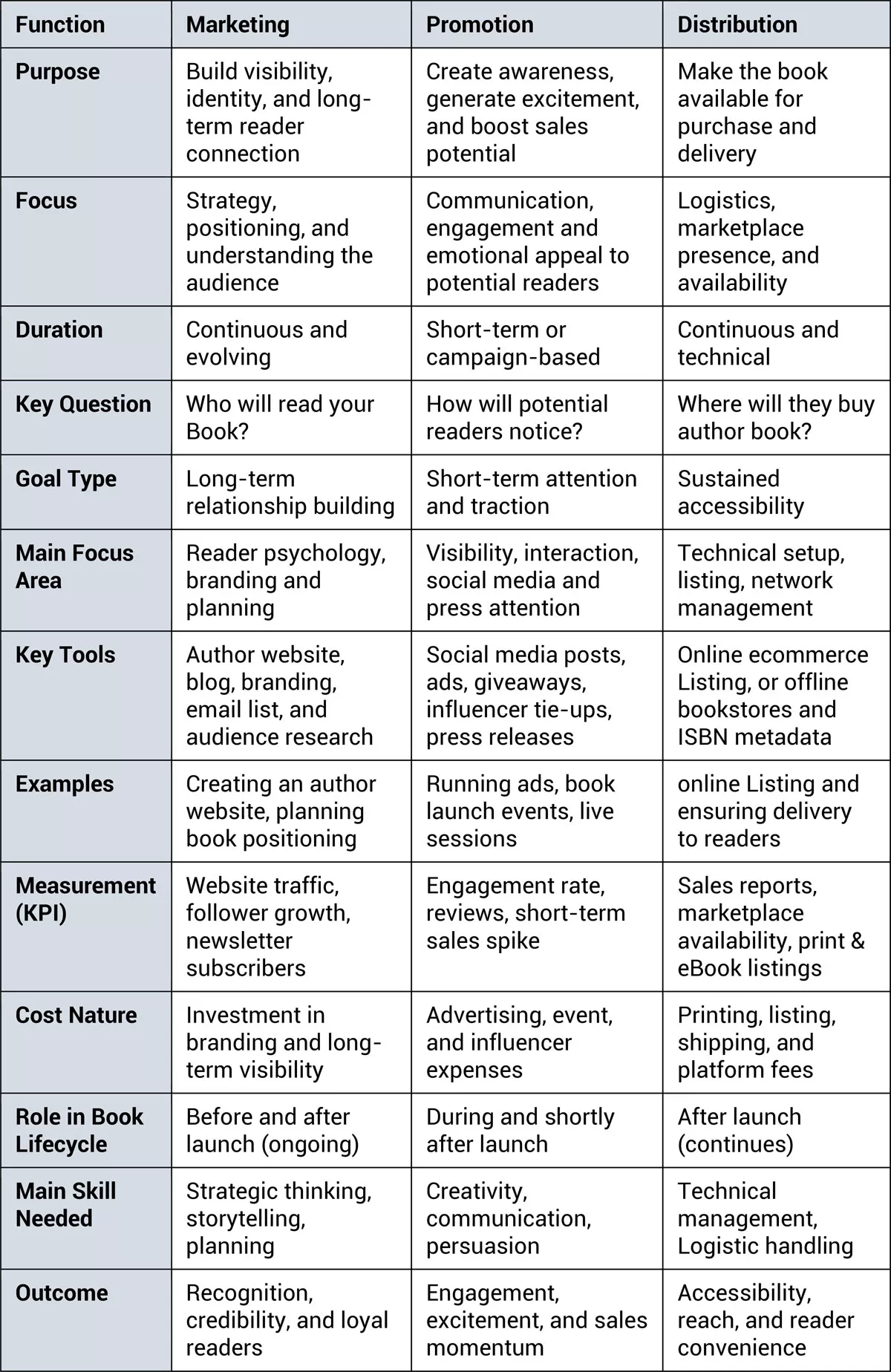
These three pillars — Marketing, Promotion, and Distribution are deeply connected. Each one supports the other, and success truly comes when they work in harmony.
You can’t rely on just one. Marketing builds the foundation, promotion creates the excitement, and distribution ensures delivery. When all three move together, your book doesn’t just reach readers, it stays with them.
Final Thoughts
In self-publishing, marketing gives direction, promotion gives momentum, and distribution gives reach. These three are not just steps in a process — they are the lifelines of a book’s existence. When all three stand in balance, your book doesn’t just sell — it lives, growing quietly in the hearts of readers long after the first launch.
Marketing plants the seed — it defines your purpose, your audience, and the soil in which your book will grow.
Promotion makes it bloom — spreading its color, fragrance, and energy through conversations, curiosity, and excitement.
Distribution carries it to every reader’s garden — ensuring that your story finds its rightful place, no matter where the reader may be.
But remember, the journey of a book doesn’t end at publication. The real success begins when your book starts connecting, inspiring, and earning trust. That’s when a product becomes a story, and a story becomes a legacy.
Self-publishing isn’t merely about putting words on paper. It’s about understanding the business behind creativity, the strategy behind passion, and the discipline behind dreams.
Authors who master these three pillars — marketing, promotion, and distribution don’t just release books into the world. They build brands that endure, voices that influence, and legacies that outlive them.
Written by : Rajender Singh Bisht
(A publishing professional and mentor for first-time authors, he brings together nearly ten years of journalistic experience with hands-on expertise in modern publishing practices.)
Follow on WhatsApp : Subscribe to our official WhatsApp channel to receive alerts whenever new posts are published on AuthorsWiki. Please note, we only share content on WhatsApp channel that is highly relevant and beneficial to authors, ensuring you stay updated with valuable insights, tips, and resources. Follow on WhatsApp
Copyright Notice © Re-publishing of this exclusive post, including but not limited to articles, author interviews, book reviews, and exclusive news published on AuthorsWiki.com, in whole or in part, on any social media platform, newspaper, literary magazine, news website, or blog, is strictly prohibited without prior written permission from AuthorsWiki. This content has been created and curated exclusively for AuthorsWiki by our editorial team, or the writer or verified contributors of the article and is protected under applicable copyright laws. To learn more about how this content is protected, please read our full Copyright Policy.